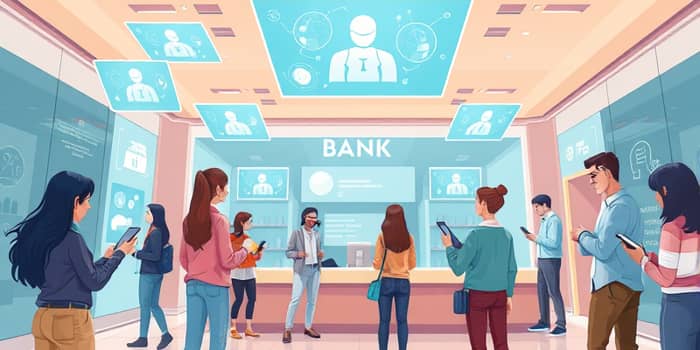
In 2025, retail banking stands at a pivotal intersection where traditional branches and cutting-edge technology converge. Institutions face the challenge of reinventing customer engagement while managing legacy systems and regulatory demands.
The past decade has seen unprecedented investment in digital platforms, with banks globally committing over $2.8 trillion to transformation initiatives. Yet only 53% of institutions report active progress, and approximately 60% remain anchored in legacy infrastructures.
As consumer expectations shift, the industry must adapt or risk obsolescence. The enduring appeal of personalized advice has not vanished, but customers now demand frictionless, instant access across channels.
Recent surveys reveal a reordering of strategic focuses for 2025. While digital transformation remains critical, the spotlight has moved to specific capabilities that deliver measurable impact.
These shifts reflect a desire to translate broad transformation goals into customer-facing enhancements that drive retention and revenue.
Contrary to predictions of branch extinction, 35% of financial institutions plan to expand physical networks in 2025, up from 29% the previous year. Among credit unions, expansion intentions leap to 61%. Simultaneously, plans to reduce branches fell from 13% to 8%, highlighting a renewed belief in face-to-face advisory as a differentiator.
Modern branches are being redesigned as advisory centers where clients access complex services and tailored, human-led guidance supported by digital tools. This blended approach strengthens relationships and deepens loyalty.
AI and automation stand at the forefront of banking’s next revolution. BCG forecasts $370 billion in annual profit gains for banks by 2030 through AI adoption. Yet, many institutions still lag in deploying real-world solutions.
By 2028, AI agents are projected to account for 29% of algorithmic value creation, up from 17% in 2025. Banks with advanced AI see cost-to-income ratios around 35%, compared to over 60% at incumbents tied to legacy codebases.
Beyond profits, algorithmic risk management and compliance automation ensure stronger resilience against evolving regulatory mandates.
Digital channels have improved efficiency but sometimes at the expense of genuine connection. The top 20% of banks, which balance efficient digital delivery and personal touch, grow 1.7x faster than peers.
Customers now expect collaborative features: co-app creation, real-time in-app support, and seamless handoffs from bots to advisors. Failure to meet these demands drives attrition and undercuts lifetime value.
Relationship banking in a digital world requires proactive engagement—anticipating needs, delivering timely advice, and fostering trust through transparent data use.
Fintechs and digital natives continue to erode incumbents’ market share by offering nimble, user-friendly experiences. Traditional banks must respond with speed, transparency, and AI sophistication rather than relying solely on scale.
Small business banking has emerged as a key battleground. Institutions are rolling out tailored solutions—mobile invoicing, payroll integration, cash flow dashboards—that enhance financial visibility.
By delivering end-to-end financial ecosystems, banks can deepen relationships with entrepreneurs and secure lucrative fee-based revenue.
Rising compliance costs, tightening margins, and intensive regulatory scrutiny demand robust operational transformation. Institutions that postpone modernization face growing technical debt and elevated risk.
Operational agility and compliance automation reduce exposure to fines and ensure smoother audit processes, freeing resources to fuel innovation.
The path beyond the branch is neither purely digital nor exclusively human. Banks must orchestrate integrated models that leverage AI for efficiency while preserving the empathy and trust of personal advisors.
Key actions for leaders include:
Those that master this transformation will compete not on branch density or balance sheet size but on speed, sophistication, and transparency. The future of retail banking is hybrid, intelligent, and customer-centric—an ecosystem where technology empowers human connection and sustained growth.
References